Next.js · static export · agent-built
A marketing site with nothing to maintain on a server.
I built the DG DevWorks marketing site to explain what my practice offers, show real proof of work, and turn visitors into calls or messages. It runs as a fully static site, and I planned and shipped it with my own DG DevTeam agent workflow.
In short: a Next.js 16 static export written in TypeScript and Tailwind CSS. All content lives in typed files, the contact form posts straight to a Discord webhook, and Vitest and Playwright tests cover components, SEO, and accessibility. Built by Daryll, AI Engineer | Full Stack Software Engineer.
- user stories shipped
- 43
- pages, all pre-rendered
- 14
- servers or databases
- 0
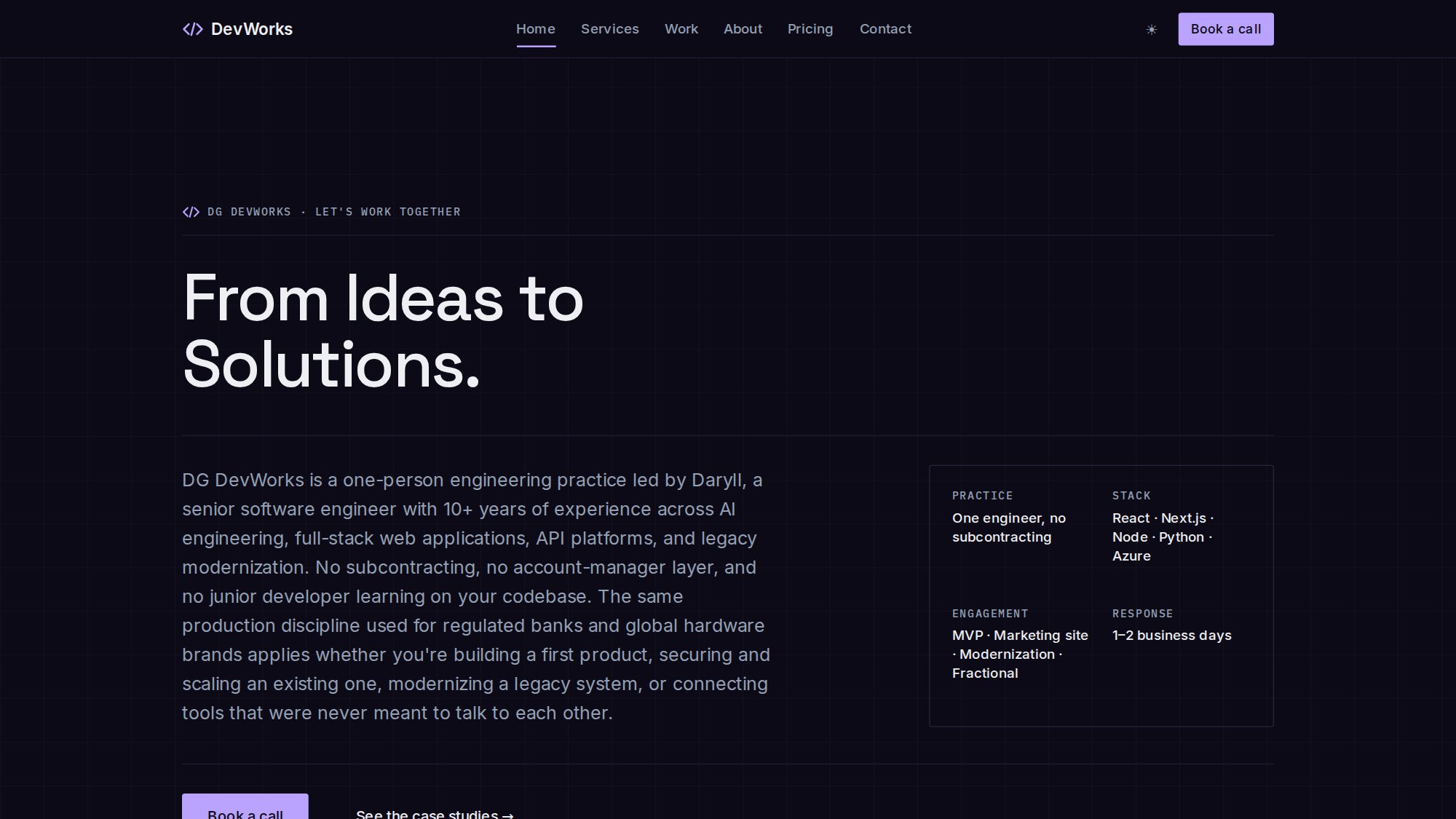
Homepage on desktop
THE CHALLENGE
Credible and fast, with no upkeep.
A one-person engineering practice needs a site that quickly explains what it offers and to whom, shows real proof of work, and makes it easy to book a call or send a message.
It also had to stay cheap and safe to run. Standing up a backend, database, or CMS just to serve a handful of pages and a contact form would add exactly the maintenance burden the site is meant to avoid.
ON DESKTOP
Every page has one clear next step.
Visitors can move from services to proof to pricing to contact, and a "Book a call" button stays in the navigation on every page.
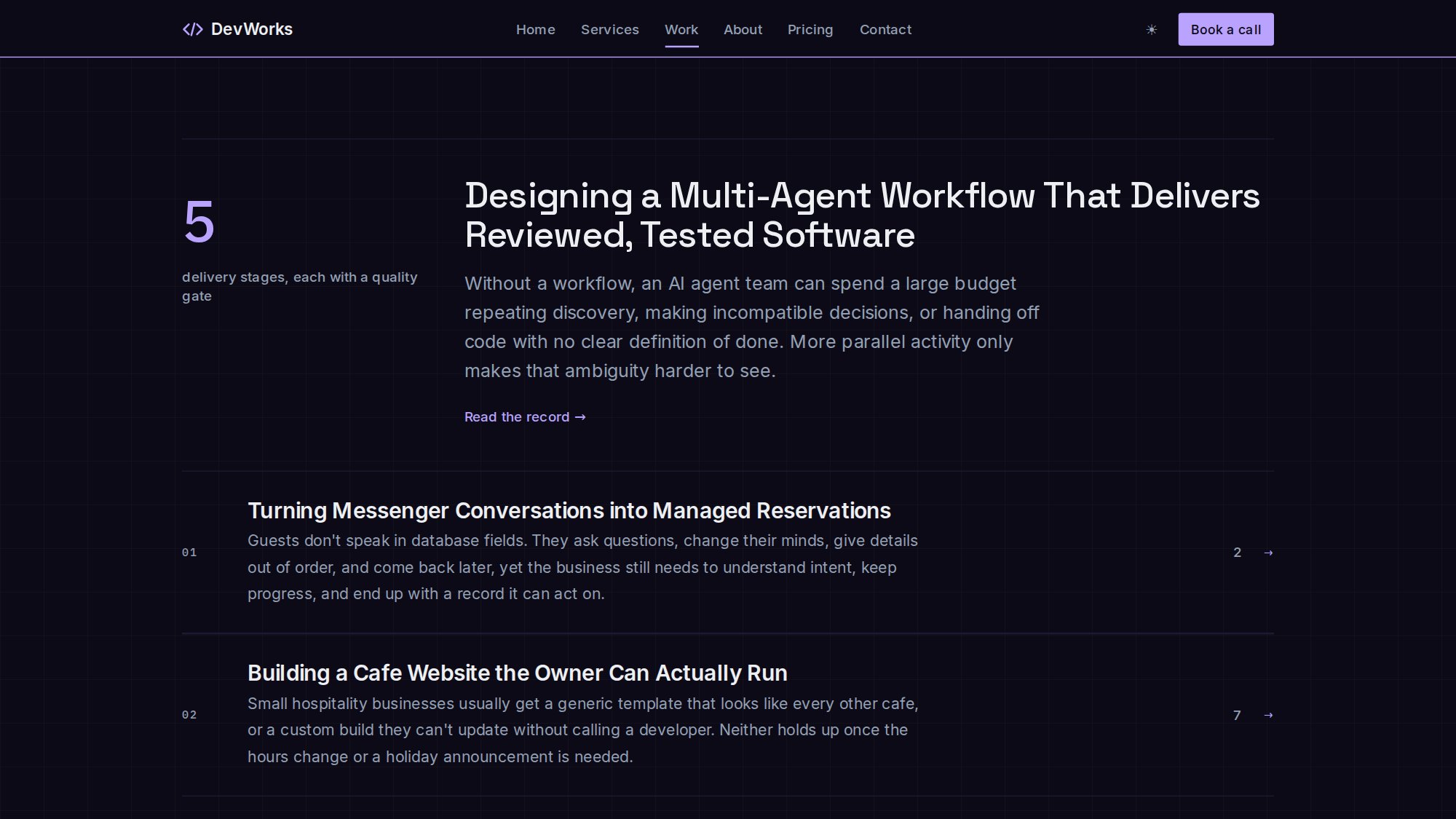
Proof of work, led by a number.
Each case study opens with one headline figure, then a short challenge statement. The lead study gets a large editorial block, and the rest follow as a numbered index that is quick to scan.
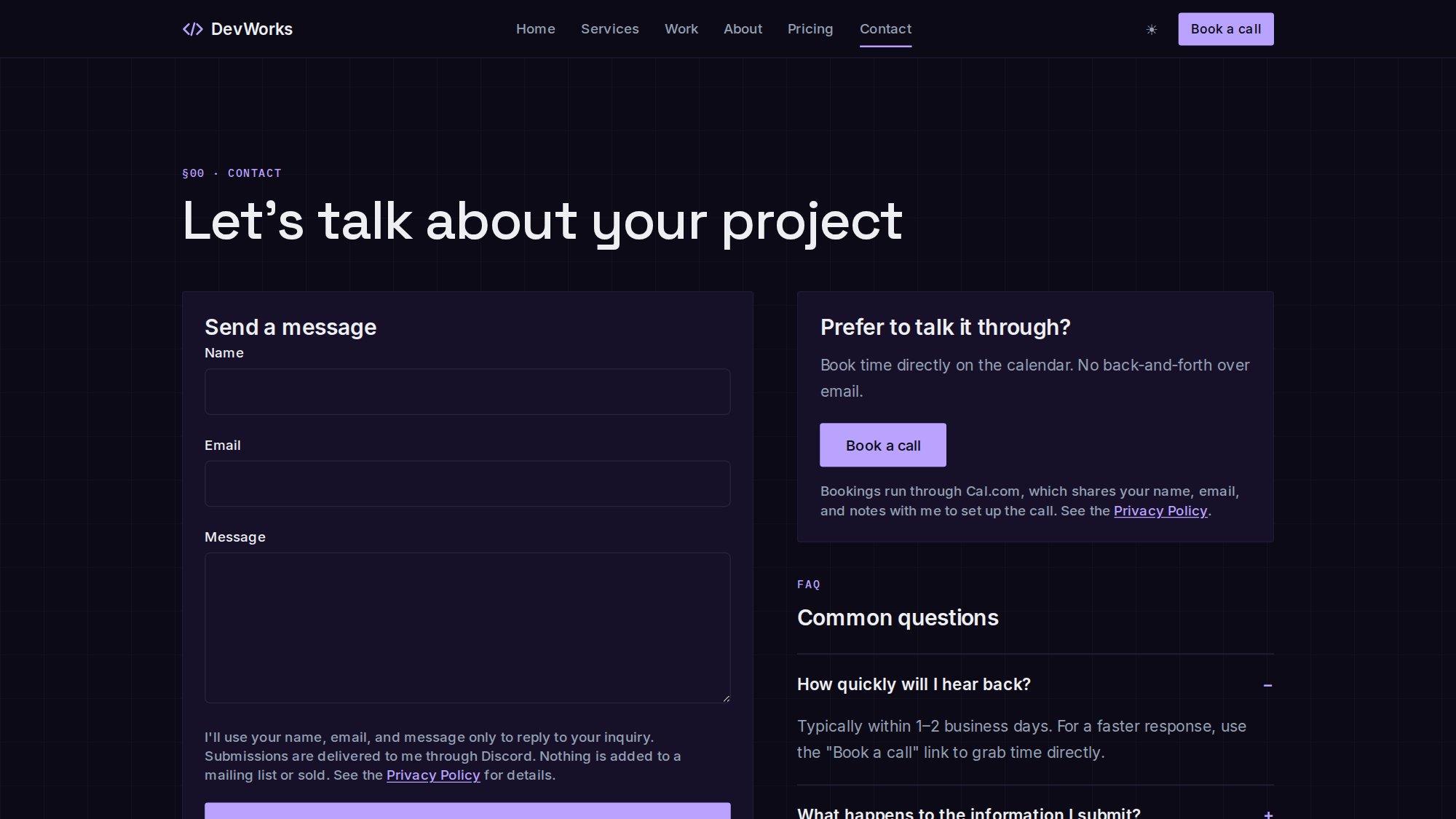
Two ways to start a conversation.
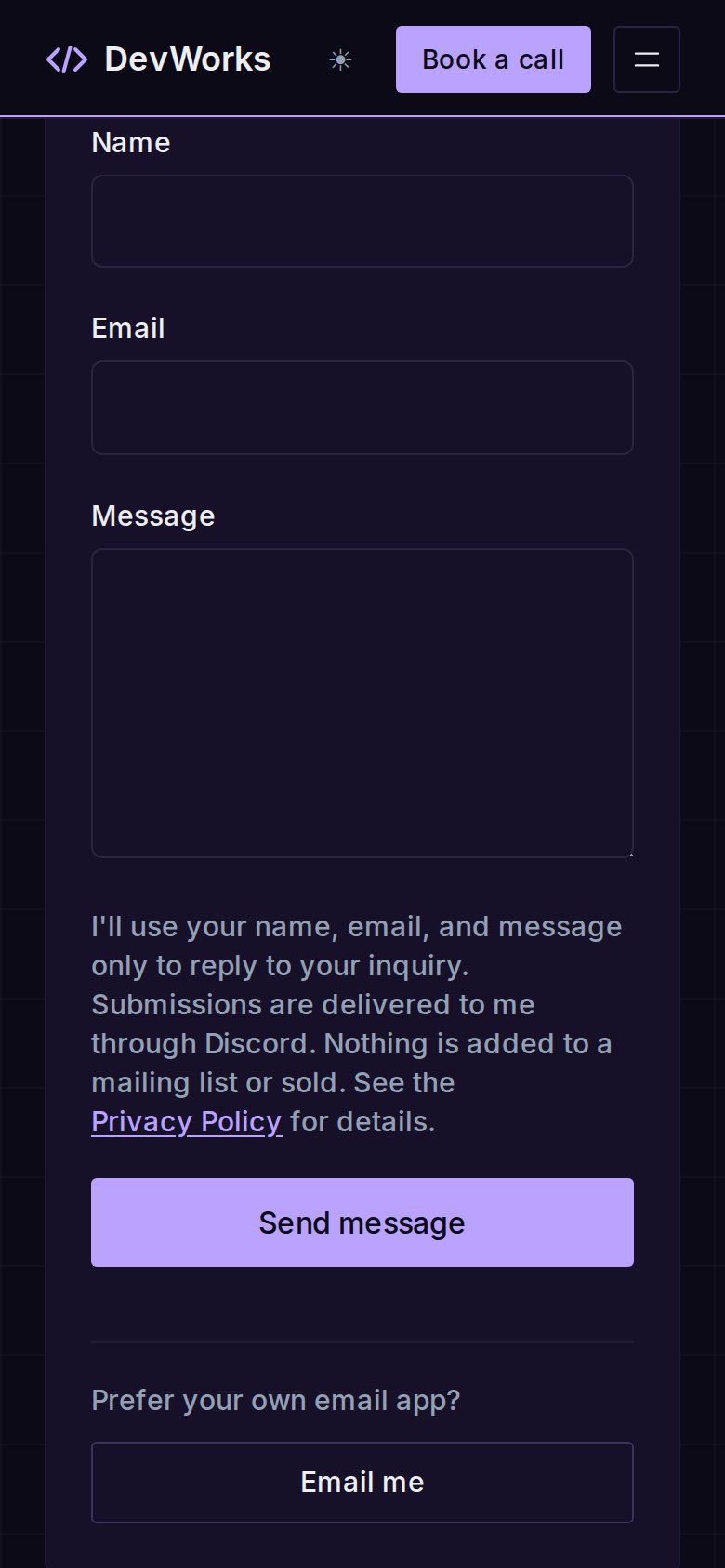
A short form sits beside a direct booking link and a few common questions. A privacy notice under the form says exactly where a message goes before anyone presses send.
ON MOBILE
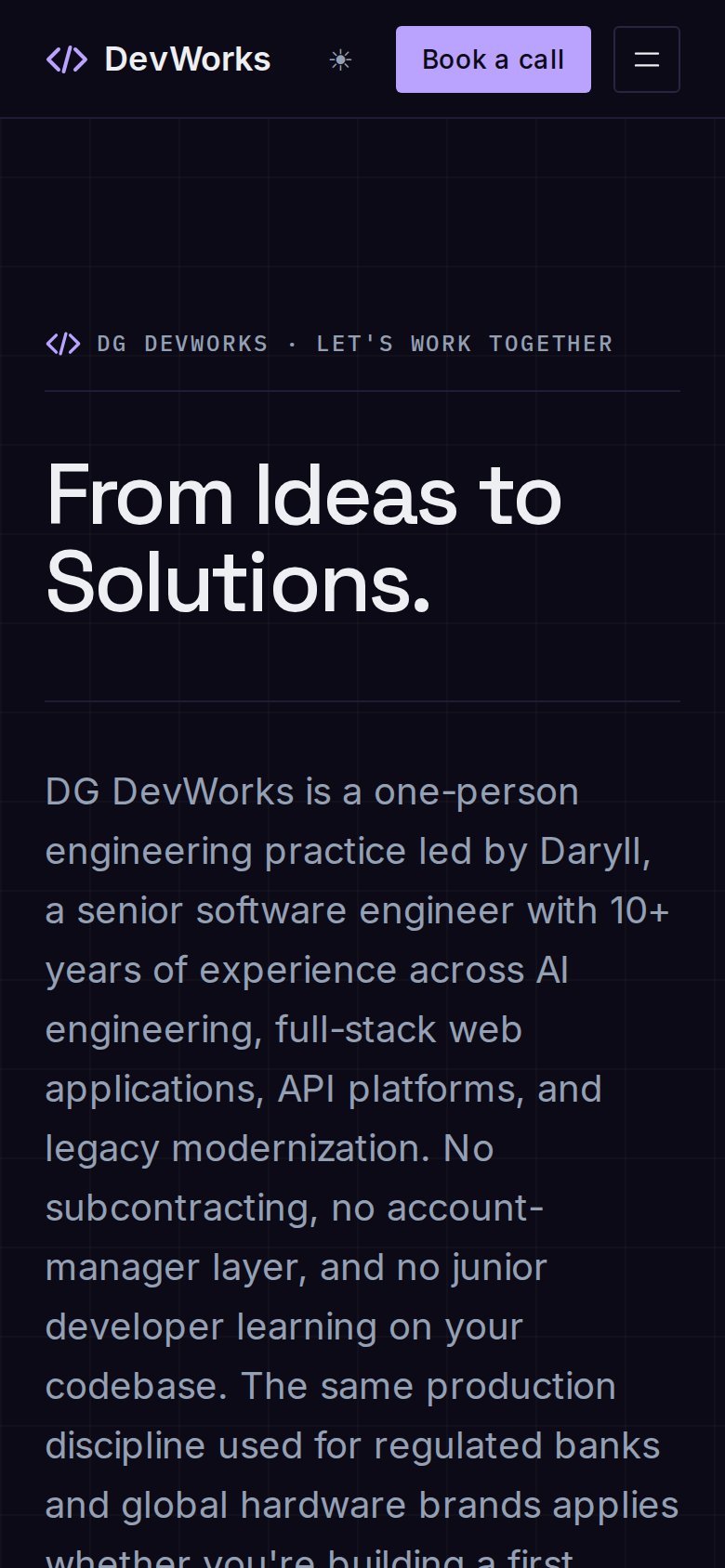
The same path, sized for a phone.
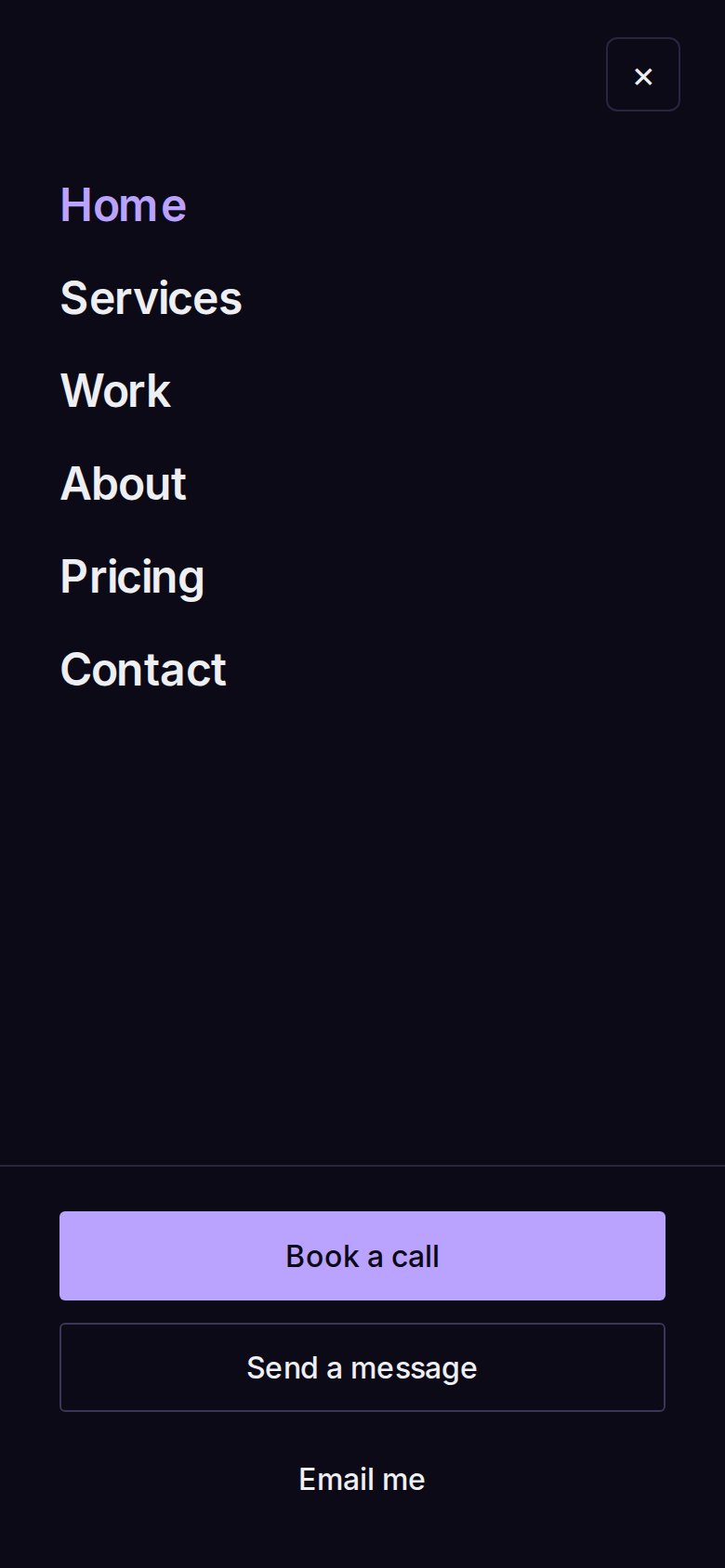
On small screens the layout stacks into one column and the navigation opens as a full-screen panel. "Book a call" stays visible in the header, and the menu repeats both ways to get in touch.
UNDER THE HOOD
Production habits on a small site.
The site is small, but it was built with the same planning, testing, and review I'd bring to a larger product.
Planned before it was built
The DG DevTeam workflow turned a brief into 6 epics and 43 user stories, a design system, and an API contract. Each story passed QA and code review before it was marked done.
Static by design
A Next.js static export pre-renders every page from typed content files. There is no server, database, or CMS to patch, and the whole site deploys as plain files.
A contact form without a backend
The form validates in the browser, filters bots with a honeypot field, and posts straight to a Discord webhook, with friendly messages when something fails or is rate-limited.
Built to be found
Every route has its own title, description, canonical URL, and Open Graph image, plus a sitemap and JSON-LD structured data for search and answer engines.
Accessibility in the test suite
Automated axe scans run against every page alongside unit, component, and Playwright end-to-end tests, so accessibility regressions fail the build instead of reaching visitors.
A theme that never flashes
A small blocking script applies the saved light or dark theme before first paint, so visitors never see the wrong colors for a split second on load.
THE OUTCOME
A marketing site that works without a server.
The DG DevWorks site shows how I approach web work: plan it properly, keep the moving parts to a minimum, and back it with tests so it stays reliable as it changes.
- A credible, fast marketing site with nothing server-side to maintain
- A contact and booking flow that works without a backend
- Search-ready metadata and structured data on every page
- A test suite that guards behavior, SEO, and accessibility on each change
Built with Next.js, TypeScript, Tailwind CSS, Vitest, and Playwright.
Discuss a website project